

Hey there! As a supplier of 3mm wood edge banding, I often get asked about the heat resistance of our product. It's a valid question, especially considering the various environments where wood edge banding is used. So, let's dive right in and explore whether 3mm wood edge banding is heat-resistant.
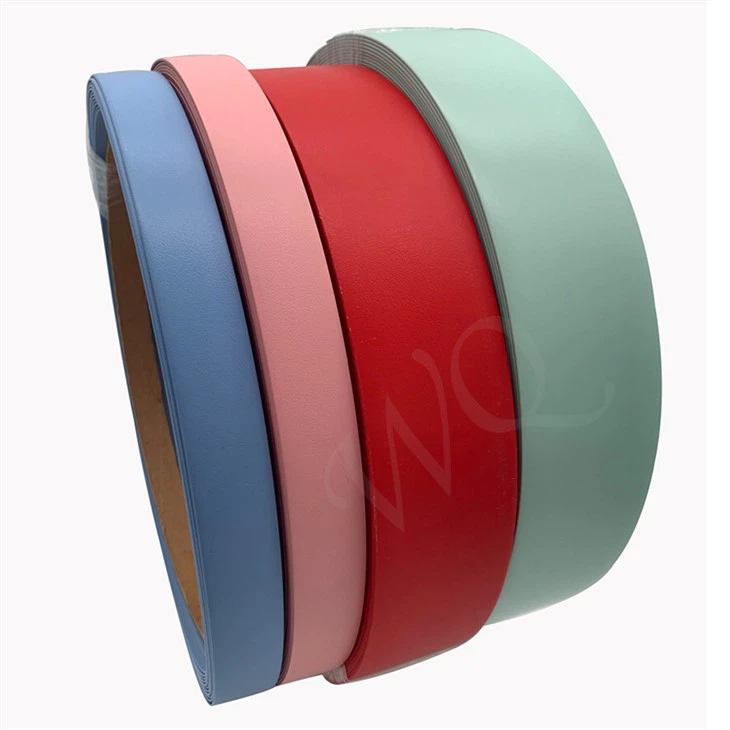
First off, what exactly is 3mm wood edge banding? It's a thin strip of material, usually made from different substances like PVC, ABS, or real wood veneer, that's used to cover the exposed edges of wooden panels. This not only gives the furniture a finished look but also protects the edges from damage, moisture, and wear.
Now, when it comes to heat resistance, it really depends on the material of the edge banding. Let's start with PVC edge banding. PVC, or polyvinyl chloride, is a commonly used material for edge banding. It's affordable, comes in a wide range of colors and patterns, and has decent durability. However, its heat resistance is somewhat limited.
PVC edge banding can generally withstand normal room temperatures without any issues. But when exposed to high heat, say above 60 - 70 degrees Celsius (140 - 158 degrees Fahrenheit), it starts to soften and lose its shape. This can lead to bubbling, warping, or even separation from the wooden panel. For example, if you place a hot pan directly on a table with PVC edge banding, you're likely to see some damage pretty quickly.
On the other hand, ABS edge banding offers better heat resistance. ABS, or acrylonitrile butadiene styrene, is a more robust plastic material. It can handle higher temperatures compared to PVC. ABS edge banding can typically withstand temperatures up to around 80 - 90 degrees Celsius (176 - 194 degrees Fahrenheit) without significant deformation. This makes it a better choice for applications where there might be some exposure to heat, like in kitchens near stoves or in industrial settings. You can check out our Abs Square Edge and Abs Edge Banding 48mm 2mm options for more details.
Real wood veneer edge banding also has its own characteristics when it comes to heat resistance. Wood is a natural material, and its response to heat can vary depending on the type of wood and its treatment. Generally, wood can handle moderate heat, but it's more prone to drying out and cracking when exposed to high temperatures for extended periods. It's important to keep the humidity levels in check as well, because dry heat can cause the wood to shrink and warp.
Another factor that affects the heat resistance of 3mm wood edge banding is the quality of the adhesive used to attach it to the wooden panel. A high - quality adhesive can help the edge banding stay in place even under some heat stress. If the adhesive is of poor quality, it might start to break down at lower temperatures, causing the edge banding to peel off.
Now, you might be wondering how to test the heat resistance of the edge banding. Well, there are some simple DIY tests you can do on a small sample. You can use a heat gun on a low setting and gradually increase the temperature while observing the edge banding for any signs of softening, bubbling, or discoloration. However, it's important to note that these tests are just rough estimates and might not accurately represent real - world conditions.
In commercial settings, manufacturers usually conduct more rigorous testing in laboratories. They use specialized equipment to simulate different heat and humidity conditions to determine the exact heat resistance limits of their products.
If you're in the market for 3mm wood edge banding and heat resistance is a concern for you, here are some tips. First, consider the environment where the edge banding will be used. If it's a high - heat area like a kitchen or a workshop, go for ABS edge banding. If cost is a major factor and the heat exposure will be minimal, PVC edge banding might be sufficient.
You can also look for edge banding that has been treated or coated to improve its heat resistance. Some manufacturers offer products with special heat - resistant coatings that can enhance their performance.
If you're having trouble finding the right edge banding, you can search for Pvc Edge Banding Tape Near Me to see if there are local suppliers.
As a supplier, I can assure you that we take the quality and heat resistance of our 3mm wood edge banding seriously. We source the best materials and use high - quality adhesives to ensure that our products perform well in different conditions. We also offer a wide range of options, so you can choose the one that best suits your needs.
If you're interested in purchasing our 3mm wood edge banding, I encourage you to get in touch. We can provide you with samples, detailed product information, and competitive pricing. Whether you're a furniture manufacturer, a DIY enthusiast, or a contractor, we're here to help you find the perfect edge banding solution.

In conclusion, 3mm wood edge banding's heat resistance varies depending on the material. PVC has limited heat resistance, while ABS offers better performance. Real wood veneer has its own unique properties when it comes to heat. By considering the environment of use and the quality of the product, you can make an informed decision. So, don't hesitate to reach out if you have any questions or want to start a procurement discussion.
References
- Plastics Industry Handbook: Information on PVC and ABS properties
- Woodworking Magazine Articles: Insights on wood veneer edge banding
- Manufacturer's Product Specifications: Data on heat resistance of different edge banding materials