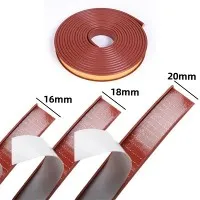
Yimin Edgebanding Decorative Material Co., Limited. : Your Professional Edge Banding Roll Manufacturer!
Established in 2008, Yimin Edgebanding Decorative Material Co., Limited. is a professional manufacturer of Furniture Edge Banding Tape, Office PVC Edge Band, Cabinet PVC Edge Band Strip and Heterromorphic Edge Band and ABS Edge Band Tape. The company covers an area of 15000 square meters, owning 30 sets of modern equipment for edge banding production line and more than 120 professional staff.
Rich Products
Our products include PVC Edge Banding, 3mm PVC Edge Banding, Cabinet PVC Edge Banding, High Gloss PVC Edge Banding Tape, Plastic Edge Banding, E3 Edge Band, Melamine PVC Edging, ABS Edge Banding & etc. With 15 years of industry experience in manufacturing edge banding decorative materials, we can provide professional customize solutions for customers to fully meet their needs.
Strong Production Capability
Located in Xiamen city, Fujian province, the company owns 30 sets of modern equipment for edge banding production line covering a total area of 15000 square meters. Moreover, we have more than 120 professional staff with rich experience in manufacturing manufacturing edge banding decorative materials.
Professional Solution
With rich experience and one-to-one service, we can help you choose products and answer technical questions. We cooperate with professional sea shipping, air and logistics companies to provide you with the best transportation solution, and we will update the logistics information of the goods in time to ensure that the goods are delivered in time.
Leading Service
We have many years of industry experience, a complete production management, quality supervision, and sales service operation system. Whether you want to purchase PVC Edge Banding or ABS Edge Banding, just email your requirements and we can customize the product for you.

Melamine Edge Banding Tape is a great option for covering edges and other surfaces that is a saturated paper and typically has some texture. This process allows the product to have preglued hot melt adhesive on the back side so that the product can be applied through heat activation with a household iron or heat gun or even hair dryer. In addition to its decorative value, Melamine Edge Banding Tape acts as a sealer and is resistant to water, high temperatures and UV exposure. This product is well proven over time to be long lasting and durable. Most of the color options are basic colors as White, Black Almond Fog Gray and Folkstone Gray, but there are many other colors and woodgrains.

Metal Edge Banding For Laminated Door
Metal Edge Banding For Laminated Door is made with aluminum stainless steel. It provides a modern and industrial aesthetic, adding a seek and contemporary look to furniture and futures. It finds applications in contemporary furniture designs, commercial interiors and industrial equipment where a modern and desirable finish is required. These types of banding ensure precise alignment during application.

Edge Banding Tape is a thin material used to seal the exposed and raw edges of plywood. Heat sensitive adhesive on one side is applied to the board while the other side acts as a barrier against dirt and moisture. Edgebanding is mainly done to cover plywood sides in order to match a cabinet's finished look, but it also protects the inner plywood from possibly warping.

PVC edge banding is a thin strip of thermoplastic material applied to the exposed edges of furniture components. It is made from Polyvinyl Chloride (PVC), which is a type of plastic polymer material that becomes moldable at certain high temperatures and then becomes solid after cooling. PVC edge banding is a versatile and essential component in the world of furniture and interior design. It is often used as an alternative to wood edgebanding because it is more durable, resistant to moisture, and less expensive.

T Edge Banding is an incredibly durable and flexible type of edge banding material that is an extruded shape with a center barb that gets pressed into a slot cut into the edge of a panel. It provides strong impact protection and a nice finished look. T Edge Banding is made using PVC and polypropylene, and is available in many standard or custom profiles and colors, including woodgrains. Because of its unorthodox shape, each T Edge Banding profile has a different-sized barb that will fit snugly into the slot. They are designed to seat firmly and hug the edge permanently.

U-Shape Edge Band is a type of PVC or ABS tape with a U-shaped profile that is applied to the edges of furniture or other items to create a smooth and finished look. It is also known as 'flexible edge banding' due to its flexibility, making it easy to apply on curved or irregularly shaped edges.

U-shaped pvc edge banding for panels and appliance decoration involves the use of a specific type of edging to enhance and protect the edges of materials and appliances, respectively
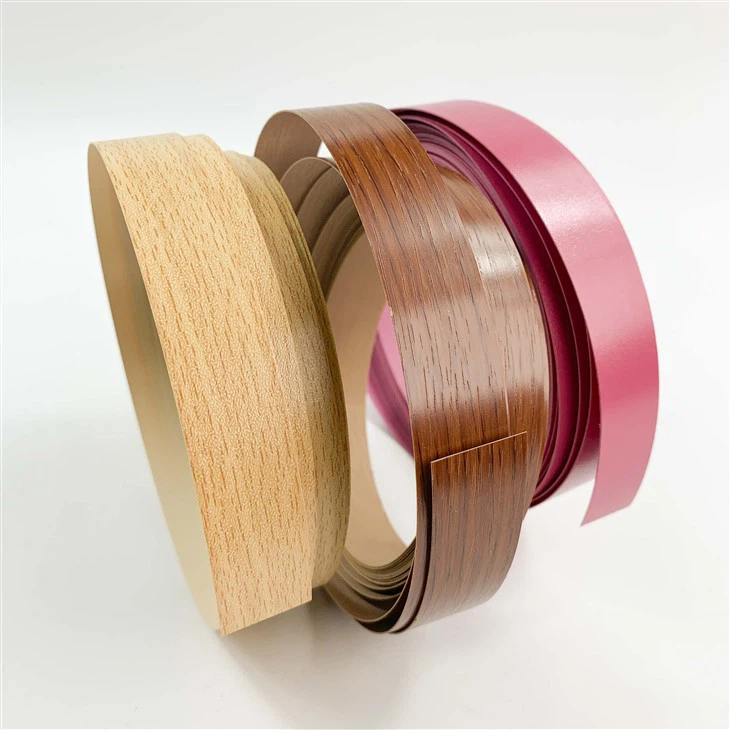
Roller offset edge banding is a technique used in woodworking and furniture manufacturing to apply edge banding material to the edges of panels, such as particleboard, MDF (Medium Density Fiberboard), plywood, etc. The term "roller offset" refers to the configuration of the rollers, which are positioned slightly off-center. This design ensures uniform pressure distribution along the edge, resulting in a consistent and precise application of the edge banding material.
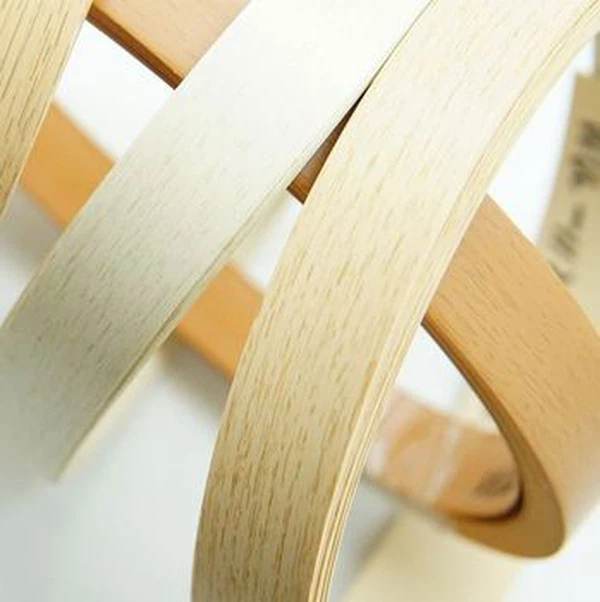
PVC abs edge banding In the world of furniture production and interior design, the quality of the final product largely depends on the materials used. Edging is a key element that greatly affects the beauty and durability of furniture. Among the countless edging materials available, two are particularly popular: ABS (acrylonitrile butadiene styrene) and PVC (polyvinyl chloride). In this comprehensive guide, we'll take a deep dive into the world of ABS edging vs. PVC edging to help you discern which option offers the best value for your business.
What is Edge Banding Roll?
Edge Banding Roll is typically made in rolls of super thin wood, such as birch or oak. It's flexible, and comes in rolls of varying lengths and widths. When affixed, it provides a smooth, clean finishing touch with a wood-grain effect. You can affix Edge Banding Roll to many surfaces, including wood, plywood trim, particle board, hardboard, and even metal. This increases durability and creates the appearance of a more solid or valuable material.
Benefits of Edge Banding Roll
Enhanced Aesthetics
Edge Banding Roll ensures that the exposed edges of your furniture match the surface, creating a cohesive and visually appealing finish. It conceals rough edges and imperfections, resulting in a professional look.
Improved Durability
By covering the edges, Edge Banding Roll protects the wood from moisture, impacts, and other potential sources of damage. This extends the lifespan of your furniture, making it more resilient and long-lasting.
Versatility in Design
Edge Banding Roll comes in a variety of materials, colors, and patterns, allowing for endless design possibilities. Whether you're aiming for a sleek, modern look or a rustic, natural feel, there's an edge banding option to suit your vision.
Cost-Effective
Edge Banding Roll is generally more budget-friendly compared to solid wood edges. It allows you to achieve the appearance of a solid wood edge without the high costs associated with using large amounts of solid wood.
Materials of Edge Banding Roll
PVC (Polyvinyl Chloride)
PVC is a popular edge banding material, it is inexpensive and comes in many wood-like colors and patterns. It's tough, waterproof and kid-friendly but not eco-friendly. PVC edge banding bends easily around corners and edges and sticks well to most surfaces. It's a great all-purpose edge banding for homes and high-traffic places, and also good for plywood edges and raw wood boards.
ABS (Acrylonitrile Butadiene Styrene)
ABS plastic edge banding is a hard, impact-resistant plastic that can be recycled. It's often used to match sleek laminate countertops and cabinets. However, ABS edge banding may not withstand very high heat as well as other materials. It comes in glossy colors but more limited woodgrain options than PVC.
Solid Wood
Solid wood edge banding provides an attractive real-wood edge that can be stained to match your wood furniture. It's naturally durable and eco-friendly but more expensive and can dent or scratch more easily than plastics. Solid wood edge banding requires protective sealants to prevent warping and may be trickier to apply around curves. But for an authentic wood finish, nothing beats real solid wood edge bander.
Wood Veneer
Wood veneer edge banding offers a thin wood edge at a lower cost than solid wood. It comes in many wood types, stains and grains but also needs protective sealants and may not resist high heat as well as plastics. Wood veneer edge banders provide an affordable wood-like option but requires more maintenance to prevent damage.
Melamine
Melamine edge banding has a printed wood grain pattern on resin-infused paper. It resists scratches, stains and wear but can't be recycled. Melamine edge banders come pre-finished in many wood tones and provides a durable wood-look edge but with limited pattern options.
Anodized aluminum
Anodized aluminum edge banding provides a sleek metallic edge that resists corrosion and scratching. However, it requires special tools to apply, may dent more easily than some plastics and comes in fewer finish options. Anodized aluminum edge banders suit high-end commercial furniture where a durable metal edge is needed.
Rubber
Rubber edge banding is flexible, slip-resistant and impact-absorbing, ideal for commercial furniture in schools, hospitals and public spaces. However, it offers limited color choices and may not stick as well to some surfaces. Rubber edge bander provides a safe, non-slip edge for high-traffic areas where injury prevention is a priority.
Purpose of Using Edge Banding Roll
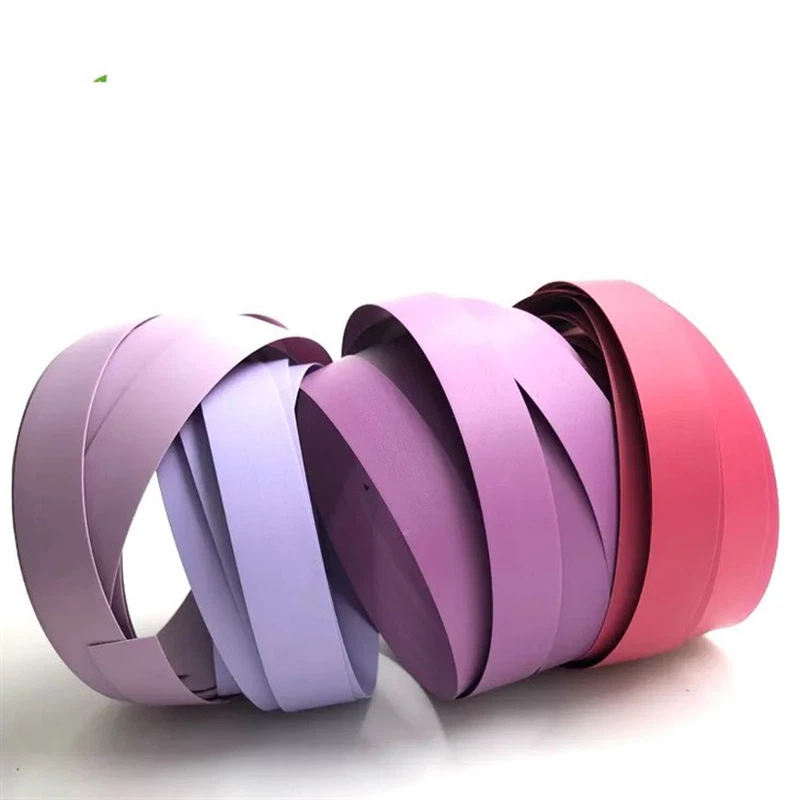
Furniture Safety and Making
Edge Banding Roll is an essential component of furniture making. It contributes to both the visual appeal and longevity of the finished pieces. Edge Banding Roll creates smooth and seamless banding that enhances the overall aesthetic appeal of the furniture. They act as a protective barrier, shielding the edges from the chipping, moisture infiltration and tears.
Cabinet Making or Room Transformation
It helps to maintain the structural integrity of the cabinets and enhances their visual appeal. Edge Banding Roll created a cohesive and polished look which provides aesthetic looks to the cabinets or rooms. Similarly, it creates a seamless transition between the cabinet surface and edges which gives the perfect impression of solid wood construction.
Customizable Design and Protection
Edge Banding Roll helps to achieve a professional looking finish on the woodworking projects. It helps in covering exposed edges with edge banding. Whether matching the edge banding to the wood species or creating contrasting accents it offers flexibility in design choices. Edge Banding Roll is helpful in versatility and provides satisfaction of creating professional-looking furniture and cabinetry from the comfort of your own work.
Factors to Consider When Choosing Edge Banding Roll
Before purchasing Edge Banding Roll, there are several factors to consider to ensure that you make the best choice, such as Thickness and Width, Color and Style Options, and Installation Method.
Thickness and Width
Edge Banding Roll thickness options can range from 0.5mm to 3mm, and widths can vary from 5/8 inch to 1-5/8 inch. It's essential to choose the right thickness and width that will match the thickness of the board or project. For instance, thicker Edge Banding Roll is more durable than thinner ones, and it caters to high traffic areas, while the thinner ones are suitable for lower traffic areas. Additionally, the width of Edge Banding Roll should also be considered. Make sure to choose the right width that will provide adequate coverage on the surface's edge.
Color and Style Options
Edge Banding Roll comes in different colors and styles. It is essential to blend color and style with the project elements for the final outcome. A close match or contrast between the Edge Banding Roll and the board or surface can make a significant difference. For example, choosing a complementary color for the Edge Banding Roll draws attention to the project's character, while a contrasting color adds depth and highlights the design.
Installation Method
Edge Banding Roll can be installed in different ways, including: pre-glued, hot melt, and iron-on. The installation method will depend on the board or surface type and the tools available. Pre-glued edge banding is an excellent option for projects that prefer a quick installation process since no extra adhesive is required. On the other hand, hot melt installation provides a strong bond, especially in high traffic areas. It's important to consider the installation method to ensure the best results for the application.
How to Apply Edge Banding Roll
The adhesive pre-applied to Edge Banding Roll is typically a type of hot-melt adhesive based on EVA (Ethylene-vinyl acetate), a type of copolymer that provides excellent bonding properties and heat resistance. This glue is solid at room temperature but melts when heated, allowing it to bond with the edge of the board. One of the simplest and most accessible methods to apply pre-glued Edge Banding Roll is by using a household iron. After cutting the Edge Banding Roll to the desired length, position it on the edge of your board. Then, using an iron set to a medium to high heat setting, slowly press and move the iron along the banding. The heat from the iron activates the adhesive, bonding the Edge Banding Roll to the board. After application, trim any excess material for a neat finish.
If you are selecting Edge Banding Rolls that are non-glued, a common way to apply it is by manually applying glue that's usually derived from Polyvinyl acetate, also known as PVC, to the edge of the panel and the banding, then using clamps to hold the banding in place while the glue dries. PVA glue is easy to work with, provides a strong bond, and dries clear, which makes it an excellent choice for many woodworking projects. Please note that for edge banding materials like PVC or melamine, a more specialized adhesive may be required. Contact cement is often used for these materials because it provides a strong bond and can withstand the heat generated by trimming and sanding processes.This method provides excellent control over the process but can be time-consuming, especially for larger projects.
For all Edge Banding Rolls, whether pre-glued or not, an edge banding machine is the preferred method. These machines automate the process, ensuring a consistent and fast application. They can handle different thicknesses and widths of edge banding and often come with trimming units to trim the excess banding after application. These machines are designed to apply glue to the banding and then press it onto the panel edge. Some machines also trim the excess banding for a neat finish. Using a machine can speed up the process and ensure a consistent, high-quality result.
Frequently Asked Questions
Hot Tags: edge banding roll, China edge banding roll manufacturers, suppliers, factory, marble effect vinyl edge band, waterproof vinyl edge band, glue on pvc edge band, transparent pvc edge band, woodgrain pvc edge band, marble effect vinyl edge banding